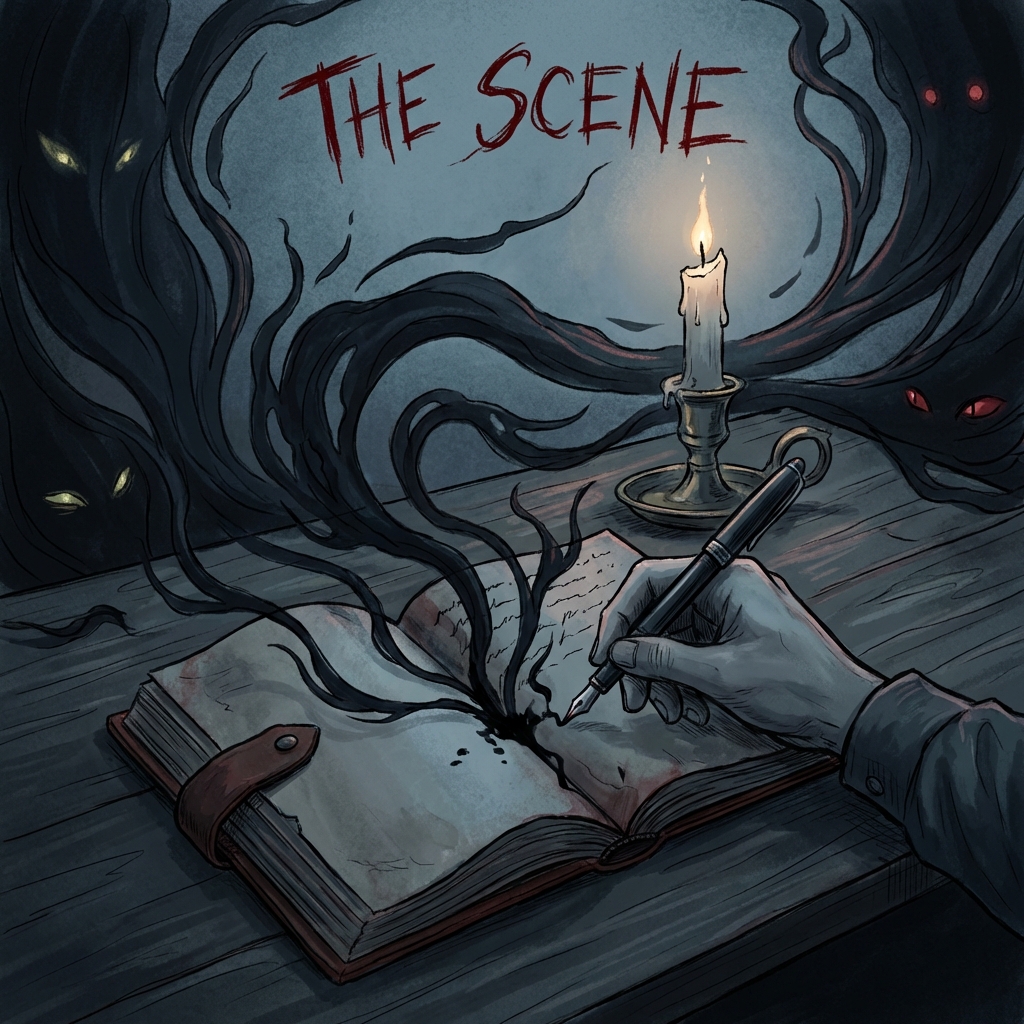
Fear is the most primal and potent of all human emotions. It completely bypasses our higher logic, our rationality, and our intellect, striking directly at the ancient, reptilian part of our brain—the lizard brain. This is exactly why it is such a devastatingly effective tool for a writer. If you can successfully make your reader feel afraid—whether it’s fear for a character's physical safety, fear for the survival of a cherished relationship, or fear of a devastating secret being revealed—you have them entirely hooked. They will not be able to put the book down.
There is a persistent misconception that inducing fear is the exclusive domain of horror writers. This couldn't be further from the truth. You don’t have to be writing a novel featuring ghosts, demons, or serial killers to utilize the mechanics of fear. In fact, every compelling genre uses fear as a core engine of narrative tension. In a thriller, it’s the visceral fear of death or capture. In a romance, it’s the agonizing fear of rejection or heartbreak. In a quiet literary drama, it’s the deep existential fear of exposure, failure, or a life unlived.
To master narrative tension, modern writers should look to the masters of the macabre. Here are three crucial techniques drawn straight from the horror writer’s toolkit that you can—and should—steal for any story you are telling.
1. The Monster You Don't See
The most common and fatal mistake novice writers make when trying to evoke fear is over-description. When the terrifying element finally appears, the novice writer describes it in exhaustive, clinical detail—the exact number of razor-sharp teeth, the precise shade of the oozing slime, the specific anatomical structure of the claws.
But here is the golden rule of suspense: Detail kills fear. As soon as you shine a bright light on the monster and describe it fully, it ceases to be a limitless terror and becomes a finite, biological object. If the reader can see it clearly, they instinctively know it has limitations. If it has limitations, you can run from it. You can reason with it. You can shoot it.
True terror always lives in the shadows of the imagination. The scariest moment in Ridley Scott’s Alien isn't the final act where we see the Xenomorph clearly; it’s the agonizing buildup where it’s just a rapidly moving blip on a motion tracker, closing in on the crew in the dark. The monster in the reader’s head is always worse than the one you can put on the page.
Applying it outside horror: When writing a devastating breakup scene, do not rely on melodrama and shouting to convey the pain. Don’t show the fight immediately. Show the unbearable, suffocating silence at the dinner table where the only sound is the clinking of silverware. Show the three-day-old unreturned text message sitting heavy on the screen. Show the packed suitcase sitting quietly by the front door. Give the reader the negative space, and let their own emotional imagination fill in the worst-case scenario. That is true dread.
2. The Power of Isolation
Fear thrives in isolation. If a character is faced with a massive problem, but they have a fully charged cell phone, a supportive partner beside them, and a credit card with no limit, the problem is not a crisis—it is merely a manageable inconvenience.
To elevate a situation from problematic to terrifying, you must systematically sever the character's lifelines to the outside world.
- Physical Isolation: The horror staples. A dead car battery on a deserted road. A flat tire in the rain. A snowstorm that knocks out the power line and blocks the driveway.
- Social Isolation: This is far more insidious. A character is surrounded by people—perhaps even at a crowded party—but they are completely alone in their experience because they hold a secret they cannot share. They are alienated from the group, rendering the crowd useless.
- Information Isolation: The character doesn't know who to trust. They are operating on bad or missing information, meaning every decision they make could be a fatal mistake.
The moment a character is truly alone—physically, socially, or psychologically—the stakes automatically double. The safety net has been removed, and the fall is suddenly fatal.
3. Sensory Deprivation
We rely entirely on our senses to map reality, predict danger, and feel secure in our environment. When a writer deliberately strips those senses away, panic instantly sets in.
Total darkness is the classic, obvious example of removing sight. But consider manipulating the other senses. What about sound? A scene that is unnaturally, oppressively quiet—where a character can hear their own heartbeat—is deeply unsettling. Conversely, an environment so loud and chaotic that a character cannot hear approaching footsteps induces extreme anxiety. What about touch? A character plunging their bare hands into freezing water, losing entirely the sensation in their fingers, creates a visceral panic because they cannot feel what they are doing.
Limit your character’s ability to perceive the incoming threat. If they can’t see, hear, or feel what is coming, they cannot prepare for it. And if the character cannot prepare, neither can your reader.